


Finishing butcher block countertops the right way is the key to lasting beauty, a healthy kitchen, and less maintenance hassle. If you’ve ever debated mineral oil versus polyurethane, worried about water stains near your sink, or regretted your first finish choice, you’re not alone. In this practical guide, we’ll break down what really works, what the research and real homeowners say, and how to choose—and apply—a finish that fits how you actually use your kitchen.
Key Takeaways
- Oil-based polyurethane and Waterlox offer the best protection with low maintenance for most homes, but only pure oils (like mineral or tung) are always food-safe for direct cutting.
- Penetrating oils look most natural but demand monthly upkeep and are vulnerable to stains; film finishes are tougher but trickier to repair if damaged.
- Repair, cost-per-year, and safe application are under-discussed—use our templates and checklists to avoid common pitfalls and hidden expenses.
- Why finishing your butcher block matters (quick primer)
- Quick decision guide: Which finish fits your kitchen lifestyle
- Best finishes compared — durability, food safety, appearance (practical ranking)
- Penetrating oils vs. film-forming finishes — step-by-step method differences
- Step-by-step application checklist for each method
- Common real-world mistakes and how to avoid them
- Tools, materials, and realistic time investment (DIY vs. pro)
- Cost estimate framework — DIY and pro
- Product comparisons and testing caveats
- Maintenance schedules and reapplication intervals by finish
- Repair and restoration protocols (the overlooked how-to)
- Environmental, VOC and health considerations
- FAQs and top 3 overlooked subtopics to answer in-depth
- Conclusion — recommended finish choices by user type + quick checklist
Why finishing your butcher block matters (quick primer)
Whether you’re sealing new butcher block or restoring old countertops, your finish decision is about much more than looks. The main goals are water and stain resistance, food safety, ease of cleaning, and overall appearance. But the big trade-off: greater protection usually means less frequent maintenance—but also bigger challenges if repairs are needed down the road.
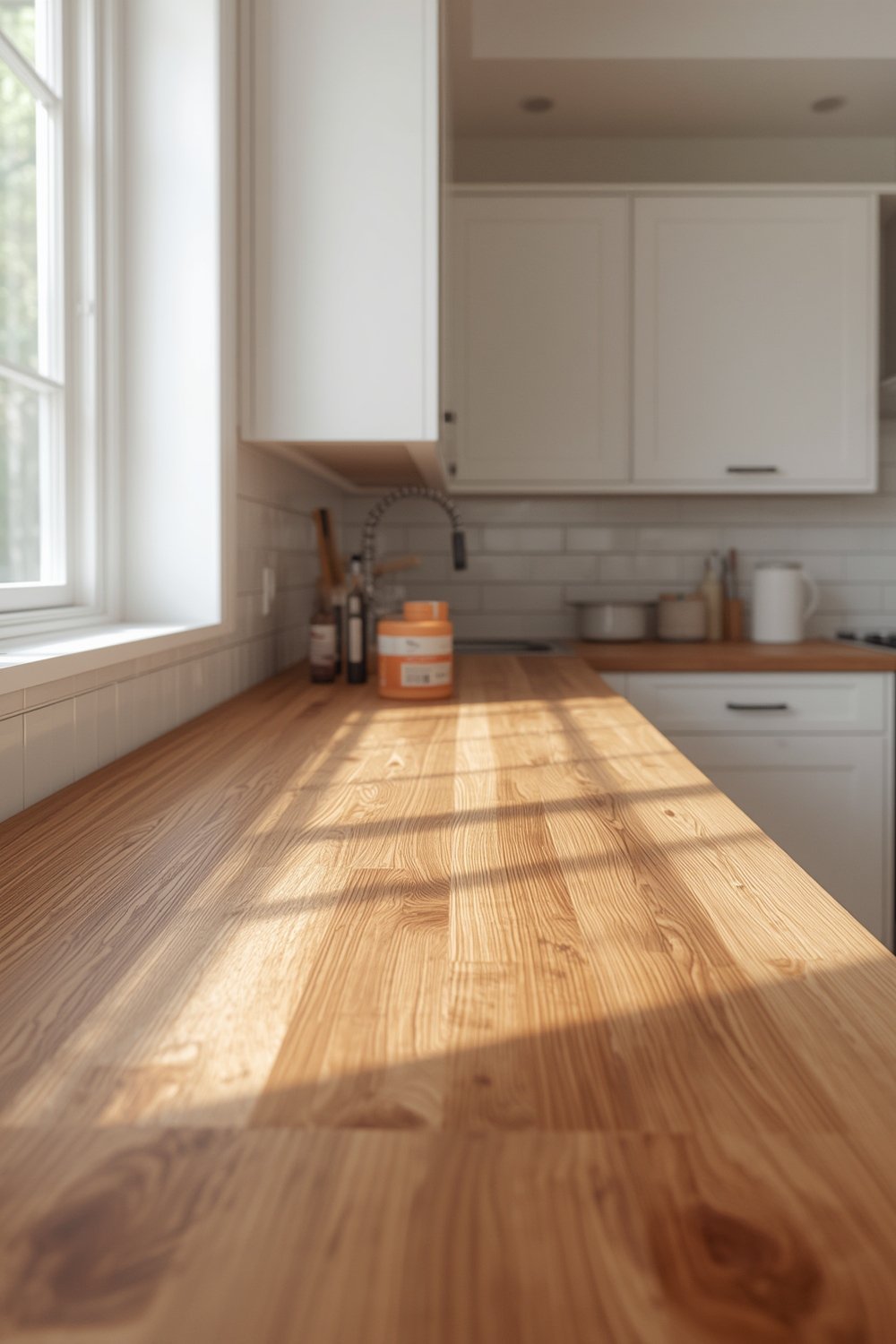
Finishing butcher block countertops with just mineral oil is simple and food-safe, but you’ll be reapplying monthly, especially after spills or near sinks. Film-forming finishes like polyurethane or Waterlox create a hard shell, blocking water and stains, and majorly cut maintenance—but take longer to cure and are not as easily repaired if damaged.
As research and homeowner reports confirm:
- Penetrating oils = easy but high upkeep
- Film finishes = tougher, less maintenance, harder repairs
More at Driven By Decor’s in-depth comparison.
Quick decision guide: Which finish fits your kitchen lifestyle
Where do you land in the maintenance vs. protection debate? This quick matrix highlights which butcher block finish to consider based on your habits and kitchen use.
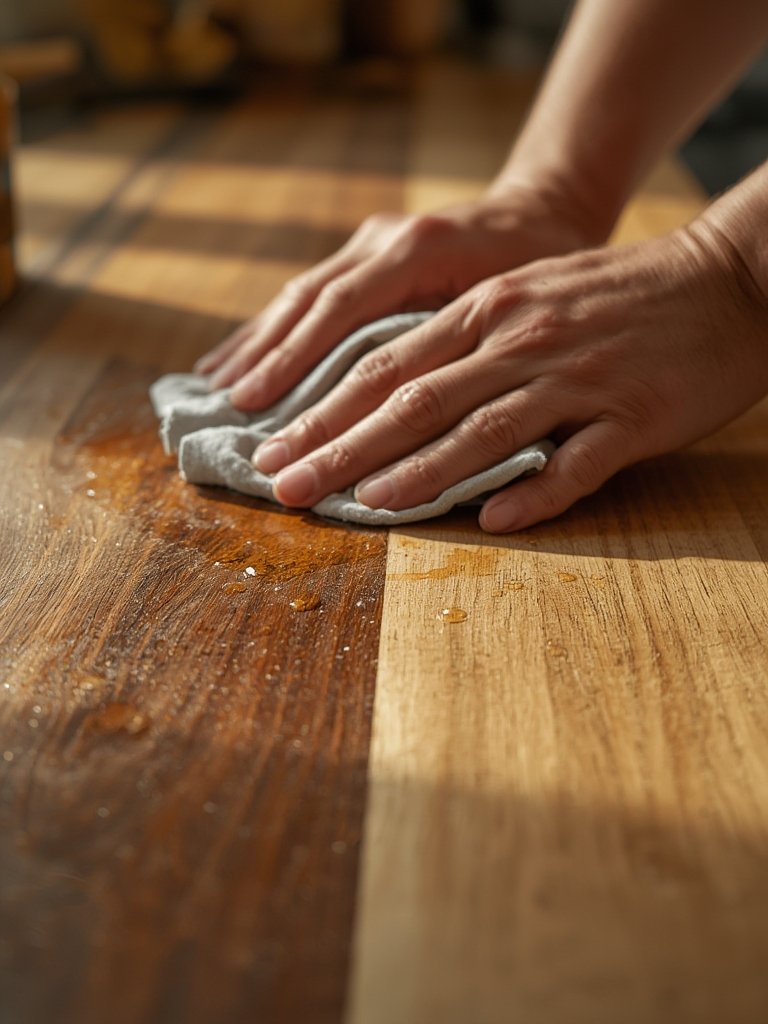
| Finish Type | Best For | Food-Safe (cutting) | Maintenance Load | Look |
|---|---|---|---|---|
| Mineral Oil (penetrating) | Direct cutting, purist cooks | Yes—cut safe | High (monthly or more) | Light, natural |
| Tung/Raw Linseed Oils | Low-to-moderate use, natural look | Yes, if pure | Moderate | Satin, light darkening |
| Waterlox (tung oil/resin blend) | Families, splash zones, durability & food-safety | Food prep safe, NO cutting | Low—after full cure | Warm amber, semi-gloss |
| Polyurethane (oil-based) | Busy kitchens, low maintenance | May not be food-safe (cutting) | Very low | Glossy, smooth “glass-like” |
| Epoxy | Maximum water/stain proof, statement looks | Not for cutting | Minimal | Deep gloss, thick resin |
For more kitchen organization tips alongside countertop upgrades, see our practical kitchen drawer organizer guide.
Best finishes compared — durability, food safety, appearance (practical ranking)
Here’s the real-world ranking, with pros, cons, and what makes each finish stand out according to homeowner tests and product documentation:
| Finish | Durability | Food Safety | Look | Maintenance |
|---|---|---|---|---|
| Polyurethane (oil-based) | ★★★★★ (highest) | Caution: NOT food-safe for cutting | Glossy, “like glass” | Yearly check, rarely needed |
| Epoxy | ★★★★★ (if applied flawlessly) | NOT for cutting | Thick, ultra-gloss | Yearly spot check |
| Waterlox | ★★★★½ (superior to oil-only) | Food-prep safe, not for cutting | Rich, warm amber | Once cured, minimal |
| Mineral Oil | ★★½ (low) | Fully food-safe | Light/natural | Monthly or more |
| Tung/Raw Linseed Oils | ★★★ (medium) | If pure, food-safe | Satin, subtle darkening | Every 2–4 months |
These rankings are based on multiple homeowner reviews (A Piece of Rainbow, Driven By Decor) and product specifications—formal lab comparisons are simply not available at this time.
Curious about other kitchen upgrades with low-maintenance perks? See our self cleaning kitchen guide.
Penetrating oils vs. film-forming finishes — step-by-step method differences
The big divide for how to seal butcher block countertops is between oils (penetrating, “soak in”) and film-formers (poly, Waterlox, epoxy, “coat on”).
Penetrating Oils
- Prep: Sand smooth (up to 200 grit), dust meticulously, remove all contaminants.
- Application: Wipe or pour oil; rub across the grain; keep surface wet for 10–20 minutes.
- Dry/Cure: Wipe away excess—surface will not “cure” as with a film.
- Coats: Flood on daily (first week), then monthly touch-ups forever.
- Tools: lint-free rags, gloves, patience.
- Maintenance: Extremely easy—wipe and go—but very frequent.
Film-Forming Finishes (Waterlox, Polyurethane, Epoxy)
- Prep: Sand up to 180–220 grit. Clean and fully dry. Remove previous oils/waxes totally for proper adhesion.
- Application: Brush or wipe—thin, even coats are critical. Follow temperature and humidity guidance.
- Dry/Cure: Wait 24 hours between coats (for Waterlox/poly), 7 days for full cure. Epoxy has a short working window—30 minutes.
- Coats: Usually 3–5 layers, or until satisfied.
- Tools: Synthetic brushes, foam applicators, NIOSH mask (polyurethane/epoxy).
- Maintenance: Rare—but more difficult spot repairs if scratched, gouged, or cloudy.
“Film-formers” block water and stains but are less forgiving of previous oils—improper prep can cause adhesion issues down the line, as seen in several online testimonials.
Learn more about how to safely apply finishing products for countertops at Oreate AI’s finish comparison.
Step-by-step application checklist for each method
Here’s how to actually finish butcher block countertops—no skipped steps, just clear procedure and what can go wrong.
Penetrating Oils (Mineral, Tung, Linseed)
- Sand the surface with 120, then 180, up to 200 grit; wipe clean with microfiber/tack cloth.
- Liberally apply oil across the surface with a lint-free rag.
- Let saturate for 20–30 minutes, then remove excess.
- Repeat daily for 1 week, then monthly.
- Buff with clean towel between coats.
Common pitfall: Over-oiling can leave sticky patches; under-oiling increases stain risk.
Waterlox
- Sand 120–200 grit, remove all dust and any existing finishes.
- Apply thin, even coat with synthetic brush or lambswool applicator.
- Allow 24 hours between coats; repeat 3–5 times.
- Final cure (no standing water/use) for 7 days.
Tip: Keep dust away between coats—contamination causes cloudiness.
Polyurethane (Oil/Water-Based)
- Sand 120–220 grit, remove dust and all residue especially if previously oiled.
- Apply first coat with quality synthetic brush, using long even strokes.
- Let dry 24 hours; light sanding (fine grit) between coats.
- Apply 3 total coats. Allow 7 days cure before heavy use/water contact.
Common pitfall: Bubbles form if shaking can or brushing too quickly.
Epoxy
- Sand and prep as above; absolutely no oil/wax residue must remain.
- Mix two-part epoxy as instructed; pour quickly (working time is short). Spread gently.
- Pop surface bubbles carefully with a heat gun or torch as they appear.
- Allow to cure 48–72 hours in warm, dust-free space (70–85°F ideal).
Watch out: Temperature swings, dust, and air bubbles are common epoxy failures.
For everyday kitchen jobs, a cordless vacuum cleaner helps keep counters dust-free during finishing projects.
Common real-world mistakes and how to avoid them
- Improper sanding: Skipping final grits leaves scratches visible forever—always finish up to at least 180–200 grit.
- Not removing old oils/waxes: New finishes won’t adhere—or bubble up—if old oiled layers remain. Full sanding required.
- Bubbles (polyurethane/epoxy): Stir, don’t shake cans; apply with controlled, gentle motion and ventilate well.
- Epoxy working time: Rushed or “stop-start” pouring can ruin entire pours. Have tools/space prepped first.
- Oil spots on papers/items: After oiling, keep all kitchen clutter off for 1–2 days. Oil can stain mail, papers, or other absorbent items.
- Water darkening near sinks: If you have an oiled surface, always wipe water immediately—standing water equals dark stains.
- Touch-up trouble: Re-oiling is easy; but fixing a single scratch on poly or Waterlox means careful spot repair (see “repairs”).
Missteps can mean lots of extra work. Check out our cabinet upgrade guide for more best-practice finishing tips.
Tools, materials, and realistic time investment (DIY vs. pro)
- Sandpaper: 120–200 grit standard. For removing previous finishes, start at 100 grit.
- Brushes/applicators: Quality synthetic for film finishes. Cheap brushes can leave streaks or bristles in the finish.
- Tack cloth/microfiber: Mandatory for deep dust removal before finishing.
- Finish materials:
- 1 quart of oil-based poly = ~300 sq ft (3 coats)
- Mineral oil = 1 pint per large island (re-oil monthly)
- Time per method:
- Oils: 1–2 hours per treatment, monthly
- Film finishes: 2–4 hours initial, but 3–5 application days plus 7-day cure (plan for a week of limited use)
- Epoxy: 3–5 hours for mixing/pouring, must cure undisturbed 48–72 hours
Professional finishing usually runs $200–$600 (varies by region and complexity). Always ask for material breakdown and warranty. For on-the-go blending and meal prep during kitchen downtime, see our portable blender guide.
Cost estimate framework — DIY and pro (how to compute cost-per-year)
Calculating the true annual cost of finishing butcher block countertops means adding up materials, time (your labor or hired), and ongoing maintenance supplies. Here’s a template you can use for any finish:
- Product/material cost (initial): [Current retail price × #cans or bottles used]
- Tool cost (brushes, sandpaper, rags): [Initial only; quality brushes <$10–20, sandpaper $5–10]
- Labor: DIY = $0 (just your hours); Pro = local hourly rate × estimated job hours (ask for a quote).
- Maintenance (recurring): Mineral oil = annual oil cost × #years; Film finishes = usually none, unless re-coating.
- Add up all costs and divide by 5 or 10 years to get true cost-per-year.
Example:
- Mineral oil: $12 per bottle × 4 bottles/year × 5 years = $240
- Oil-based poly: $30 quart (covers entire project, rarely needs reapply) + $10 supplies = $40 for 5–10 years
For updated pricing, check your local big box or specialty wood store—published research does not provide 2024 prices.
For other in-depth kitchen expense planning, see our water filter pitcher savings guide.
Product comparisons and testing caveats (what we know and what’s missing)
Here’s what’s clear: Based on dozens of homeowner reviews, Waterlox lasts longer and blocks water far better than mineral oil. Polyurethane gives the toughest, “glass-like” shell, and epoxy (if applied carefully) is king for water, stain, and heat resistance.
But: there are no independent lab tests or standardized consumer reports that pit finish brands against each other under controlled conditions (as of 2024). All durability and food-safety comparisons are repeated user experience, not measured tests.
To best evaluate new products and marketing claims:
- Look for independent homeowner side-by-side photos (before/after, Waterlox vs. oil, etc).
- Ask for MSDS sheets: see actual ingredients and any formal food-safety certifications.
- Ignore unqualified “food-safe” labels unless accompanied by NSF or FDA citations.
- Start with a small area test—no finish is one-size-fits-all for your climate or kitchen style.
Find more unbiased appliance research in our smart air fryer buying guide.
Maintenance schedules and reapplication intervals by finish
| Finish | Aftercare | Typical Reapplication | Signs You Need to Re-finish |
|---|---|---|---|
| Mineral Oil | Wipe dry daily, re-oil as water repels poorly | Monthly, or when surface looks dry/pale | Water absorbs, stains linger, feeling rough |
| Waterlox | Gentle cleaning, no soaking | Rare, initial 3–5 coats then leave alone | Dullness, water not beading, scratches |
| Oil-based Polyurethane | Wipe only, avoid harsh chemicals | Check yearly, rarely needed | Deep scratches, water absorption |
| Epoxy | Avoid standing heat/pots; wipe gently | Yearly surface check, repair if damaged | Cloudiness, gouges, loss of gloss |
“If you see water no longer beads—or staining starts to appear—it’s time to reapply or repair.” (Driven By Decor).
Repair and restoration protocols (the overlooked how-to)
Most guides gloss over what to actually do if your butcher block countertop gets dark stains, scratches, or if the finish is failing. Here’s how to fix real-world problems:
Water-darkening & stains (Oiled surfaces)
- Sand the problem area with 120 then 180 grit until stain fades or wood is evenly bare.
- Wipe all dust, apply multiple coats of oil; feather into neighboring area.
- For deep stains, try hydrogen peroxide (test spot first), then resand and re-oil.
Scratches, dullness, wear (Film finishes: Waterlox, Poly, Epoxy)
- Clean area, lightly sand with 220 grit to feather the edges of the scratch or dull spot.
- Clean with tack cloth, apply thin finish layer (match your original—don’t mix brands/types).
- Let cure fully—blending is tougher than oils, but spot touch-ups are possible.
- For large damage: Fully sand to bare wood, follow original application steps. Warning: If block was previously oiled and you apply a film finish, adhesion may suffer—test a small patch first.
Full strip-and-reseal
- Use a random orbital sander (~100, then 150, then 220 grit) to take finish completely down to bare wood.
- Vacuum and tack clean. Wipe with mineral spirits if safe for your wood species (test first).
- Apply new finish as above (do not shortcut drying or cure times).
If you do see blistering or adhesion issues after switching finishes, stop and remove all previous layers. Don’t risk a “peeling” effect that can trap water or bacteria.
For more details on kitchen hygiene and sustainable cleaning, check our guide to eco-friendly reusable towels.
Environmental, VOC and health considerations (application and long-term)
There’s a big difference in how various butcher block countertop finishes affect air quality, user comfort, and potential food safety.
- Water-based polyurethanes: Faster drying, very low odor, much lower VOCs than oil-based types—but may not be as durable for heavy-use kitchen zones (A Piece of Rainbow).
- Oil-based polyurethane: High VOCs during application; off-gassing for several days. Must ventilate well; use NIOSH mask if finishing indoors.
- Epoxy: Low VOC once cured, but potent chemical smell during mixing and pouring; wear gloves and mask.
- Oils (mineral, tung): Generally food-safe and low odor, but always confirm product is labeled as food-grade or pure (no heavy metals/driers).
Application safety:
- Always finish in ventilated space—open windows, use fans.
- Protect skin and eyes; use gloves, goggles, and mask, especially for all film-forming finishes.
- Follow manufacturer instructions for food safety; if claims seem vague, choose alternatives for peace of mind where it matters.
FAQs and top 3 overlooked subtopics to answer in-depth
How do I calculate real cost-per-year for butcher block maintenance?
Add up initial product/tool costs, then add up annual re-oiling or rare recoating expenses. Divide total cost by number of years (5 or 10). Film finishes look pricey upfront—but often save hundreds in reapplication supplies over their usable lifespan.
What’s the right way to repair a damaged film finish (Waterlox, Poly, Epoxy)?
Clean, sand area to feather edges, reapply matching finish thinly, and let cure completely. For severe cases (deep gouges, peeling), sand entire top to bare wood before refinishing. Avoid mixing finish types to prevent adhesion problems.
Which finishes are safest for families and food preparation—environmentally and health-wise?
Pure mineral and tung oils (food-grade) are safest for direct food/cutting use, with lowest VOCs. Water-based polys are next-best for low odor/VOCs but are not recommended for surfaces you cut directly on. Always ventilate and avoid skin contact during any application.
Can you switch from oil to polyurethane and vice versa?
If you previously oiled your top, you must sand to bare wood before applying film finishes like poly or Waterlox. Remaining oil prevents proper adhesion and can cause future peeling or bubbling. It’s safer to stick with the same method or do a full strip if switching.
Conclusion — recommended finish choices by user type + quick checklist
If you want the least hassle for finishing butcher block countertops—and don’t cut directly on the surface—Waterlox or oil-based polyurethane provides the best blend of durability, maintenance, and lasting appearance. For families who want food-contact safety but don’t want endless oiling, start Waterlox right from the beginning. If you insist on cutting on your counters, stick with pure mineral or tung oil, but be prepared for the monthly ritual.
Quick reference for success:
- Fully sand, clean, and dry the surface—never shortcut prep.
- Choose finish based on how you actually use your kitchen (see matrix above!).
- Follow manufacturer’s instructions for coats, drying, and cure windows.
- Avoid mixing finish types unless sanding completely back to bare wood.
- Check finish regularly and repair small issues promptly to prevent larger problems.
Still unsure? Start with a small area or scrap. If you want more kitchen DIY and maintenance guides, explore more expert kitchen advice at Get Kitchen Ready. Protect your investment, keep it food-safe, and save time (and rework) in the long run.