


Best induction cookware has become an essential search for modern home cooks who want reliable, efficient, and safe tools for everyday meals. But with so much marketing jargon and confusing technical claims, how do you make a smart purchase—without overpaying or ending up with pans that won’t work at all? This no-nonsense guide breaks down everything you need to know, from magnetic basics to actionable buying tips, and maps real recommendations to your cooking style and budget.
Key Takeaways
- Induction-compatible cookware must have a magnetic base—use the magnet-stick test as your first check.
- Materials and construction both drive performance: cladded stainless, enameled iron, and properly built aluminum are the most versatile for real-world use.
- Don’t overpay for marketing—spend on multi-ply bodies, thick bottoms, durability, and verified oven safety, not just a fancy brand name.
- Quick buying TL;DR — Best induction cookware by use-case
- What “induction compatible” actually means — the magnetic and electrical basics
- Materials compared — performance, efficiency and longevity
- Construction matters — cladded bodies vs. disk bottoms vs. fully magnetic bottoms
- Common user complaints — heating efficiency, warping, durability, and more
- Price ranges and what justifies cost (features to look for)
- Maintenance, cleaning and real-world usability issues
- Certifications, safety and what matters in 2024
- A practical buying checklist and decision flow (quick tests & questions to ask)
- Gaps competitors miss — three advanced topics to cover in-depth
- FAQs and quick myth-busting
- Final recommendations by budget and cooking style
Quick buying TL;DR — Best induction cookware by use-case
If you’re in a hurry, these are the best induction cookware choices mapped to the most common needs—all chosen for reliable magnetic compatibility and robust construction:
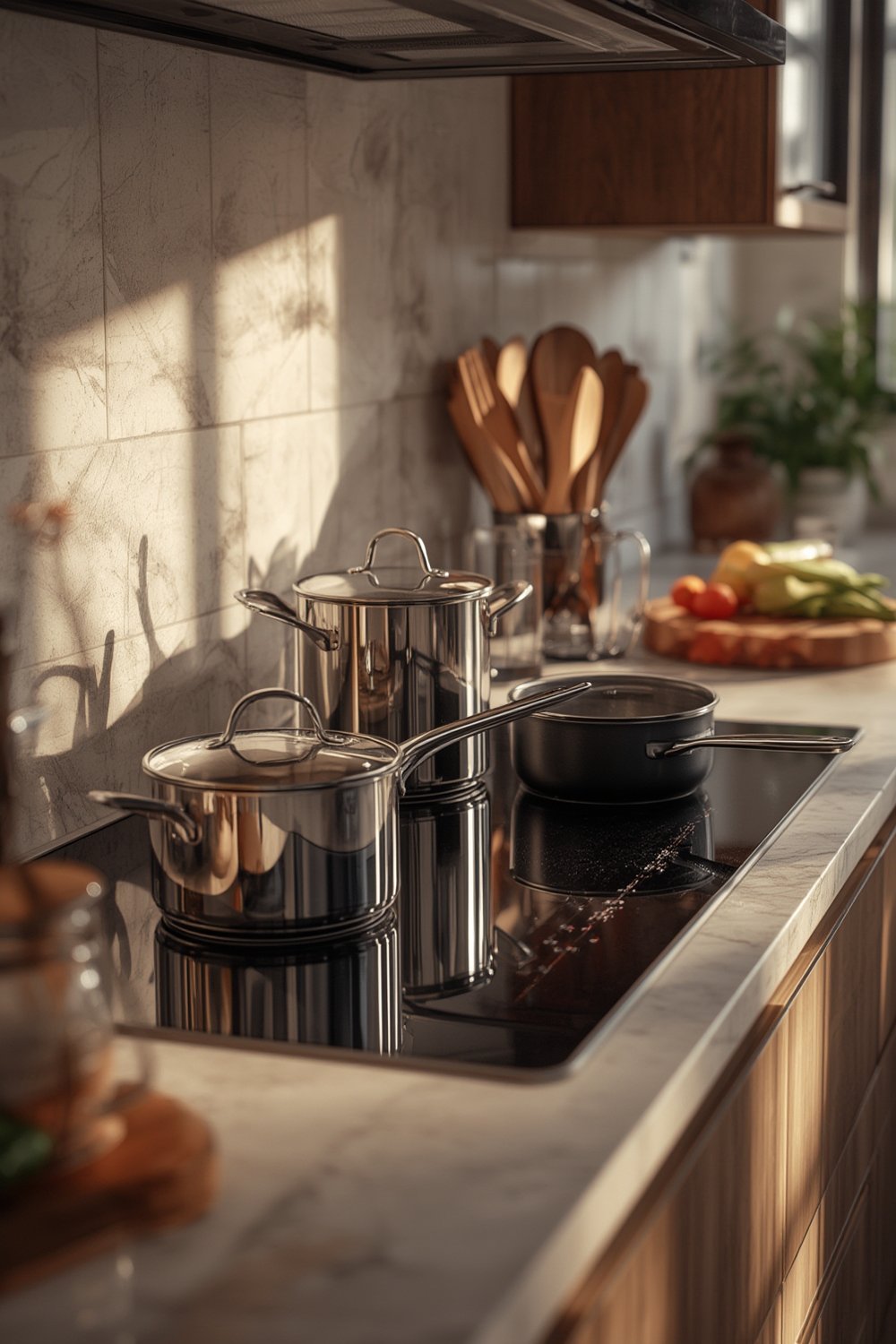
- All-purpose everyday set: Go for a tri-ply or 5-ply clad stainless steel set (e.g., 400-series bottom)—great for searing, simmering, and even heating across most recipes.
- Budget single skillet: Look for a deeply discounted, full-magnetic bottom skillet—heavy-gauge aluminum core with a stainless (magnetic!) disk or base.
- High-end/professional set: Invest in fully cladded 5-ply stainless (like Demeyere or All-Clad D5), featuring thick bodies and precise oven safety.
- Enamelled braiser for slow cooking: Choose a heavy enameled iron Dutch oven (e.g., Le Creuset, Staub) for superior retention—just confirm induction compatibility via the magnet test.
- Nonstick for eggs/fish: Seek a pan with a full-magnetic base or “Magneto” bottom and a PFAS-free advanced ceramic or PTFE coating.
Remember: Induction compatibility requires the cookware base to be magnetic—test by seeing if a magnet sticks to the bottom. If not, it won’t heat up on your induction stove.
What “induction compatible” actually means — the magnetic and electrical basics
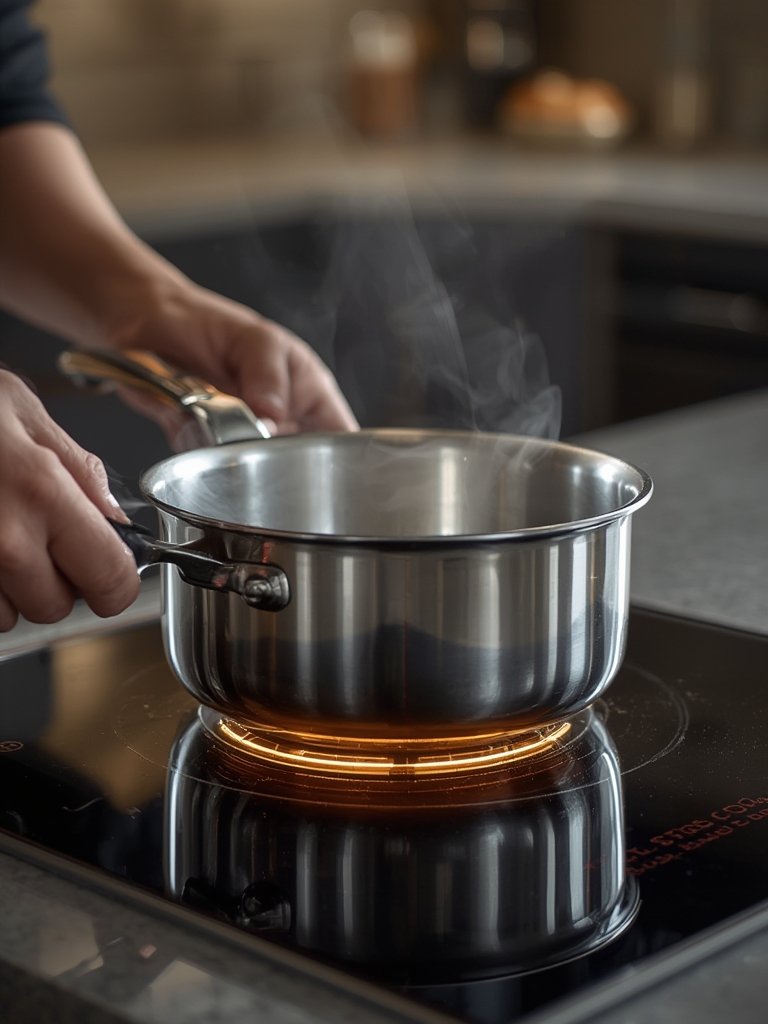
The term “induction compatible cookware” is often used by brands, but here’s what it really means: For cookware to work on an induction cooktop, the base must be magnetic. Induction stoves use a high-frequency electromagnetic field that only heats pans made of ferromagnetic materials. If a magnet doesn’t stick securely to the bottom, it’s a dealbreaker.
Technically, this is all about material science and engineering—induction generates eddy currents in the magnetic base of your pan, which creates heat. Not all stainless steel is equal: 400-series stainless (like 409) offers higher surface resistance and better coupling to induction fields compared to the widely used 300-series (like 304), which has low resistance and is often almost non-magnetic. That’s why some stainless pots—especially cheaper models—simply won’t get hot on an induction hob.
Copper and pure aluminum won’t work unless they have a magnetic, stainless-steel base or a special induction “sandwich” construction. For an in-depth technical overview, see this engineering report.
Materials compared — performance, efficiency and longevity
Material science shapes how your cookware behaves. Here’s a data-driven comparison, including efficiency (energy transferred from stove to food), maintenance, and why it matters for different cooking tasks. Use this to pick for your main style—fast searing, low-and-slow braising, or gentle nonstick cooking.
| Material | Induction Efficiency | Pros | Cons | Best For | Longevity/Notes |
|---|---|---|---|---|---|
| Stainless Steel (Cladded 3/5-ply) | 87–90% | Non-reactive, durable, dishwasher safe | Uneven heat if not fully cladded, pricey | Multi-purpose, sautéing, searing | Long-lasting; tri/5-ply reduces hot spots |
| Cast Iron | 85% | Excellent retention, browns beautifully, oven proof | Heavy, requires seasoning, rust-prone | Steaks, slow-cooking, deep frying | Can last decades if maintained |
| Enamelled Iron | 91% | No seasoning needed, great for acidic foods | Hefty, slow to heat, expensive | Braising, stews, roasts | Very durable, easy to clean |
| Aluminum (w/ steel base) | 70–82% | Lightweight, heats quick, affordable | Needs magnetic base, can warp if thin | Stir-frying, omelets | Look for thick bases & good cladding |
| Copper (w/ magnetic steel base) | ≈60% | Rapid heat response, gourmet sauces | Pricey, requires magnetic sandwich | Delicate saucemaking | High maintenance, niche use |
| Nonstick (Ceramic/PTFE) | N/A | Easy clean, low oil, good for eggs/fish | Limited lifespan, not for high heat | Eggs, pancakes, fragile fish | Advanced ceramics last 37x longer than standard |
Main lesson: Cladded stainless or enameled iron are the best induction cookware choices for balanced performance and longevity, but don’t overlook the importance of robust pan construction (see next section). For more on kitchen gear upgrades, explore these related guides: portable blenders for fast meal prep, and water filter pitchers for safe drinking water.
Construction matters — cladded bodies vs. disk bottoms vs. fully magnetic bottoms
How your pan is built directly affects heating performance and longevity. Here’s what to look for:
- Cladded (Tri/5-Ply): Layers of magnetic stainless (for induction response) sandwiching an aluminum (or copper) core for superior heat distribution and even cooking. Reduces hot spots and warping.
- Disk-bottom (“Sandwich”): Usually a cheaper pan with a thin steel or iron disk under a base of aluminum or stainless. Good if thick, but can result in hotspots or loose disks after heavy use.
- Fully Magnetic Bodies: The entire pan is made from magnetic steel (rare but found in high-end brands). Most responsive but heavy and expensive.
The best induction cookware almost always uses robust multi-ply cladding or a heavy, bonded base—not just thin aluminum with a steel cap. Look for at least 2.5–3mm thickness (often labeled as 3-ply, 5-ply, or “fully clad”).
If you’re interested in boosting oven-to-table convenience, see our Le Creuset cookware guide—these enameled iron pieces are still world-class for slow cooking and are always induction ready.
Common user complaints — heating efficiency, warping, durability, and more
Even the best induction-compatible cookware isn’t perfect. Here’s what real users often encounter and how to avoid the worst issues:
- Poor heating or no heating at all: Usually caused by 300-series stainless (non-magnetic), thin pans, or a base that only barely attracts a magnet.
- Warping: Cheap/thin aluminum or unreinforced bases will warp under high heat, leading to poor pan contact and uneven heating.
- Heavy weight: Cast iron and enameled iron can be hard to handle, especially in large sizes.
- Rusting: Bare cast iron is prone to rust if you skip seasoning or leave it wet. Enameled iron solves this, but at a cost.
- Nonstick coating wear: Most traditional PTFE coatings degrade fast with high heat, steel utensils, or dishwasher use. Only high-end ceramics (like Infinite8, Thermolon) have proven long life and are safe for metal tools.
- Noise (“buzzing”): Some pans produce a faint buzzing or vibration on induction; this is usually harmless and depends on pan weight and material stacks.
Other tips for daily pain points: Pick ergonomic, comfortable handles and check overall pan balance. Explore these hacks for smarter kitchen setups—like a magnetic spice rack to keep your cook area organized, or a portable lunch box for meal prepping.
Price ranges and what justifies cost (features to look for)
Price bands shift quickly, but here’s what actually drives cost for induction cookware—and what’s worth your money:
- Construction: 5-ply or 3-ply, thick (3–5mm) bodies cost more for a reason. They resist warping, provide even heat, and last years.
- Nonstick longevity: Expect to pay more for ceramic (PFAS-free) coatings proven to outlast regular PTFE, like Thermolon or Infinite8.
- Advanced base tech: “Magneto” or “Balance Pro” induction plates improve efficiency and heat transfer.
- Oven-safety: Truly high-end pans withstand up to 600°F; this is critical for searing then finishing in the oven.
- Anodized/hard finishes: Help prevent scratches and make cleaning easier—especially important for aluminum bases.
- Warranty/support: Premium sets often carry a true lifetime or multi-year warranty, making the extra cost worthwhile for daily cooks.
No official price averages exist, but expect to pay at least 1.5–2x more for genuine 5-ply pro sets versus basic disk-bottom types. Buy the features—cladding, oven proof rating, and PFAS-free nonstick—not just the brand badge.
Maintenance, cleaning and real-world usability issues
Real-world care keeps induction-compatible cookware working its best. Here’s what matters by type:
- Cast iron: Needs regular seasoning and drying to prevent rust. Never soak for long; use a stiff brush plus oil after cleaning.
- Enameled iron: Dishwasher safe and low maintenance, but still heavy—protect against chipping the enamel (especially around rims and handles).
- Nonstick: Skip the dishwasher with classic PTFE pans; ceramic nonstick is often dishwasher safe (e.g., Infinite8, Thermolon) and will survive metal utensils if labeled as such. Avoid high heat for longer coating life.
- Aluminum: Even with a magnetic base, aluminum can warp—always preheat with some oil/food in the pan and avoid sudden temperature shock.
- Stainless cladded: Most dishwasher safe; scrub stuck bits with Barkeeper’s Friend or vinegar for shine. Avoid steel wool pads.
Consider ergonomics (handle comfort, pan weight) and stovetop stability. Big, sticky residue buildups? Try a pre-soak or enzyme cleaner safe for your pan type. For even easier kitchen cleanup, check our silicone air fryer liner guide.
Certifications, safety and what matters in 2024
There are no government-required or industry-specific standards just for induction cookware in 2024. That means “induction compatible” claims are up to the brand—and you need to independently check pan specs and documentation.
- Food-contact safety: Most reputable brands follow FDA food safety guidelines for coatings and materials. Look for “PFOA/PFAS-free” on nonstick pans.
- NSF certification: Only necessary for commercial kitchens—often a sign of durability and safe construction, but not essential for home use.
- RoHS compliance: Rarely listed, but indicative of controlled materials/environmental safety (useful for EU buyers).
- Warranty terms: Sometimes, this is your true “safety net”—prefer brands offering lifetime or 5-year guarantees.
Always verify coating details yourself and don’t assume any pan or set labeled “induction ready” truly means efficient, safe, or long-lived. For peace of mind with premium iron cookware, our Le Creuset guide details what real world warranties and material quality mean.
A practical buying checklist and decision flow (quick tests & questions to ask)
Make a confident choice using this checklist:
- Magnet test: Always check magnetic pull at the pan’s bottom center.
- Stainless grade (if shown): 400-series (e.g., 409, 430) is good; 300-series (e.g., 304, 316) is not, unless clad with a magnetic layer.
- Construction: Tri-ply, 5-ply, disk-bottom, or fully clad? More layers = better heat and durability.
- Pan weight and handle feel: Can you comfortably lift and pour with it?
- Oven-safe temp: What’s the max? Over 500°F preferred for versatility.
- Warranty and support: How long is the written guarantee?
- PFAS/PFOA status (for nonstick): Look for advanced ceramic or “PTFE-free” where possible.
- Check real use cases: Is the piece best for searing, simmering, eggs, or slow-cooking?
Decision flow:
- If you cook mainly quick, daily meals → Buy a cladded stainless set with magnetic base.
- If you’re a bargain hunter on a tight budget → Find a single heavy-gauge induction skillet with a proven magnetic disk.
- If you want low-maintenance, healthy nonstick → Prioritize PFAS-free ceramic with “Magneto” induction plate.
- If you love slow-cooked stews → Grab an enameled iron Dutch oven (magnet-tested) and enjoy years of service.
Curious how induction cookware fits a modern kitchen routine? See how other essential upgrades (like a standing desk converter) have re-shaped high-efficiency homes.
Gaps competitors miss — three advanced topics to cover in-depth
Let’s go deeper into the engineering details that really matter for performance:
- Electrical/magnetic properties of stainless grades:Induction works best on 400-series stainless because of its “skin depth” (the measure of how deep currents penetrate at the usual 24 kHz induction frequency). 300-series is usually non-magnetic, causing failed heating or slow response. For the curious, you can replicate a basic “skin effect” test using a thermal camera—see how heat spreads in a 400-series vs 304 pan!
- Precise energy efficiency by material:According to research (full study): Enameled iron is most efficient (91%), then stainless (87–90%), cast iron (85%), thick aluminum with magnetic base (70–82%), and copper with steel base (~60%). For practical energy savings and faster boil times, avoid thin non-magnetic pans.
- Construction and real-world tests:Perform your own “boil time” experiment: Place the same volume of water in different pans (all induction compatible), start cold, and time to rolling boil at identical cooktop settings. Expect faster heating and less hot spotting in fully clad pans vs. disk-bottom or non-clad types.
Want to geek out further? Read more on technical pan construction, then consider a hybrid kitchen setup—using a smart air fryer for additional crisping power.
FAQs and quick myth-busting
Will my old pans work on an induction cooktop?
Only if the base is magnetic. Try the magnet-stick test: if a magnet grabs firmly, you’re good to go. If not, they won’t work on induction.
Are induction pans really more energy efficient?
Yes, especially stainless and enameled iron—research shows up to 91% energy efficiency for the best materials versus 60–70% for copper or basic aluminum. Results depend on construction and fit with the induction burner size.
Can pure copper or aluminum work on induction?
No, unless they have a magnetic steel base or “sandwich” construction. Pure copper and aluminum are non-magnetic and will not heat up on induction stoves.
What’s the quickest way to test induction compatibility?
Use a small magnet (even a fridge magnet). Stick it to the bottom: if it grabs well, the pan will work. Weak or no attraction means incompatibility.
Do I have to buy a full set, or can I mix and match?
You can absolutely mix and match. Many cooks prefer using a high-quality stainless set plus a separate enameled Dutch oven for braising and a single nonstick skillet for eggs or fish.
Final recommendations by budget and cooking style
Here are practical best induction cookware scenarios, tying together everything above:
- Budget-minded (single pieces): Buy a heavy magnetic-bottom skillet (thick aluminum with steel disk or a basic tri-ply sauté). Skip ultra-thin, lightweight pans—they warp and underperform.
- Mid-range (complete sets): Choose a 3-ply or 5-ply cladded stainless set (400-series base) plus an enameled Dutch oven—best versatility and even heating for daily family meals.
- Premium/professional: Invest in fully clad, thick-body 5-ply pieces (like All-Clad D5 or Demeyere), advanced ceramic nonstick for eggs/fish, and premium enameled cast iron for braises.
- Specialty cook (slow cooking, braising): Go enameled iron (Le Creuset, Staub), magnet-tested for certain induction fit—best for stews, bakes, and oven-finished family dishes.
In summary, opt for magnetic, truly induction compatible cookware—prefer robust cladding and thick bottoms for durability, and never skip the magnet test. For your next kitchen upgrade, explore related workflow-improving guides: organizing with a kitchen drawer organizer or simplifying meal prep with a portable blender. Happy cooking—choose wisely and enjoy decades of reliable performance from your set!