


Ninja air fryer wattage often surprises home cooks—knowing the real power draw is the difference between simple, cheap meals and unexpected breaker trips or sky-high bills. If you want to master your Ninja air fryer without blowing a fuse or your budget, you’re in the right place. This guide breaks down exactly how much power Ninja models use, how to estimate your energy cost by habit, and what most owners (and your circuit panel) wish you already knew before plugging in.
Key Takeaways
- Ninja air fryer wattage runs from about 1,550W to 1,780W—higher than many expect, and enough to nearly max out a standard 15A (120V) kitchen circuit.
- One typical 20-minute cook at 1,700W uses about 0.57 kWh (roughly 8–9 cents at US averages); batch size, function, preheat, and multi-zone cooking can push consumption higher.
- You’ll likely save money compared to ovens, but always check your model’s rating against household circuit limits, especially if running more than one high-power appliance at once.
- Quick snapshot — Ninja air fryer wattage today
- How Ninja wattage compares to other leading air fryer brands
- Estimating energy use — kWh per use and monthly examples (quick formulas + scenarios)
- Energy-efficiency comparison — Ninja vs. conventional ovens and vs. other air fryers
- Unique insight #1 — How basket size, dual-zone and multi-basket designs affect real power draw
- Unique insight #2 — How function (air fry, roast, dehydrate), preheat time and user habits change kWh per cook
- Unique insight #3 — Circuit compatibility and peak-draw risks (breaker trips, outlet limitations)
- What real owners report (actual billing & complaints)
- Common user pain points and troubleshooting related to power
- Practical, evidence-based tips to minimize energy use (operating best practices)
- Quick buying & usage checklist (who should pick which wattage/model and why)
- Short FAQ (concise answers readers will search for)
- Sources & methodology note (what we used and where data is weak)
Quick snapshot — Ninja air fryer wattage today
Most Ninja air fryers in 2024–2025 fall between 1,550W and 1,780W. Here’s a quick breakdown of the most common models:
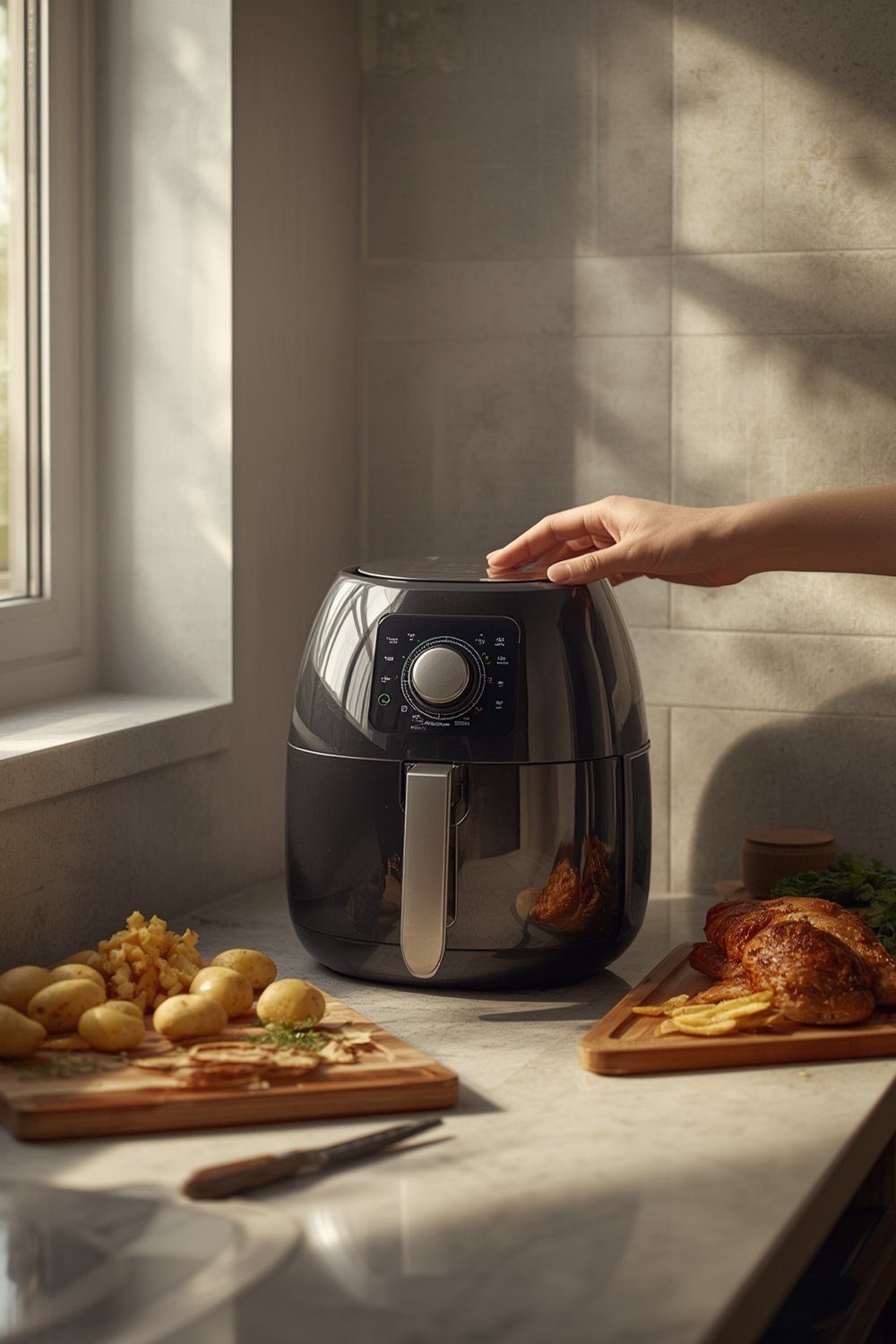
- Ninja AF101 (4QT): 1,550W — a solid, small household starter.
- Ninja Air Fryer Max XL AF161 (5QT): 1,750W — popular mid-size, more capacity, more power.
- Ninja Combi Multicooker: Approximately 1,780W — one of the highest powered Ninja models, with bake/roast/steam combo features.
This wide wattage range means a Ninja air fryer can use as much power as a countertop oven or, briefly, even more than a microwave. Always check your model’s spec label before plugging it into non-kitchen outlets or older power strips. For deeper detail on kitchen appliance wattages and their implications, see our Smart Air Fryer Guide.
Sources: YouTube Review: Ninja/COSORI Comparison, Home Depot, Homes & Gardens.
How Ninja wattage compares to other leading air fryer brands
How does Ninja stack up against other leading air fryer brands? Most major competitors play in a similar wattage band—but power isn’t the whole story. Here’s a direct wattage comparison for mainstream models in 2024:
| Brand/Model | Basket Size | Rated Wattage | Notes |
|---|---|---|---|
| Ninja AF101 | 4 QT | 1,550W | Fast starter, single-basket |
| Ninja AF161 Max XL | 5 QT | 1,750W | Popular for larger meals |
| Ninja Combi Multicooker | Multi | 1,780W | All-in-one: bake, steam, air fry |
| COSORI Pro LE | 5 QT | 1,500W | DC motor, efficient fan |
| COSORI Turbo Blaze | 6 QT | 1,725W | DC motor for faster heating |
| Instant Vortex Plus | 6 QT | Not specified | Generally in 1,400–1,700W |
Ninja’s wattage usually sits mid- to upper-range, making it potent but not an outlier. However, real-world efficiency can be higher or lower based on the design. For example, COSORI’s Turbo Blaze at 1,725W is extremely fast (thanks to its DC motor and high-speed fan), while an older, same-wattage model might lag.
Want to see how your Ninja stacks up against other kitchen gadgets? Compare to the Electric Lunch Box energy guide for more small-appliance power tips.
Source: Side-by-side air fryer reviews.
Estimating energy use — kWh per use and monthly examples (quick formulas + scenarios)
Manufacturers rarely publish per-cook power consumption, but you can calculate it yourself with a simple formula. Here’s how to estimate:
- kWh per use = (Wattage ÷ 1,000) × Hours used
Example scenario: 20-minute cycle on a 1,700W model.
1,700 ÷ 1,000 × (20 ÷ 60) = 1.7 × 0.333 = 0.57 kWh per use.
If your electricity price is $0.15/kWh, that’s about 9 cents per cycle.
For monthly impact, estimate your usage:
- Low use: 8–10 cycles/month ≈ 5.7 kWh, or under $1/month
- Medium use: 20–25 cycles/month ≈ 11–14 kWh, or $1.70–$2.10/month
- Heavy use: 45+ cycles/month ≈ 26 kWh, under $4/month
These are only examples—longer/hotter cycles (roast, dehydrate), extra preheat, or running two baskets will raise consumption. Want smarter usage tracking? Use a plug-in power meter (example on Amazon).
Sources: Research Report: Ninja Air Fryer Wattage and Power Consumption.
Energy-efficiency comparison — Ninja vs. conventional ovens and vs. other air fryers
Air fryers—especially Ninja models—almost always use less electricity than ovens. Why?
- They preheat extremely fast (usually under 3 minutes)
- The small basket cavity requires less energy to heat
- Cooking cycles are shorter and more even—no long, drawn-out bake
One review even estimated up to $60 annual savings compared to regular oven use (source), though real world savings will depend on your habits.
Versus other air fryers, Ninja’s efficiency comes from quick ramp-up and optimized airflow, but premium DC-motor models like the COSORI Turbo Blaze can beat even high-wattage Ninjas for speed (and potentially use less energy per meal).
See more real-world healthy cooking hacks in our Smart Air Fryer Guide and quick energy comparisons in the Heated Blanket Energy Savings Guide.
Unique insight #1 — How basket size, dual-zone and multi-basket designs affect real power draw
Rated wattage is always per appliance—not per basket. Most single-basket air fryers’ specs are clear: 1,550–1,780W. But dual-zone (or Double Stack) models, like the Ninja Foodi DualZone, introduce a twist:
- If both baskets run at full power simultaneously, your total draw could double (peak around 1,800W).
- Many manufacturers (including Ninja) do not clearly state the simultaneous wattage for both baskets on all models.
- This matters—a standard 15A, 120V kitchen circuit is rated for a maximum of 1,800W (continuously, less for startups and mixed loads).
If your household has only one kitchen circuit, or you’re using older outlets, play it safe: avoid running both zones with another high-draw appliance (like a microwave or toaster oven) at the same time. For multi-use tips and meal planning, check our Portable Blender Guide for more kitchen circuit smarts.
Sources: SharkNinja Product Pages.
Unique insight #2 — How function (air fry, roast, dehydrate), preheat time and user habits change kWh per cook
There’s more to energy use than just wattage—it depends on how you cook:
- Air fry at 400°F for 10–15 minutes is relatively efficient.
- Roast or bake at high temp for 30–45 minutes can use 2–3× more energy per cook.
- Dehydrate mode runs at lower power but can last hours, quietly adding up.
- Preheat time is short on most Ninjas (under 3 minutes), and preheating for every batch is usually unnecessary.
Unfortunately, no user-tested kWh measurements exist for each mode. The best move? Minimize unnecessary preheat and batch similar foods together—for example, roasting veggies and protein at the same time in a DualZone model, using Match/Sync modes. For even more cleanup and efficiency boosts, try Silicone Air Fryer Liners to speed up batch turnover.
Sources: Research Report: Ninja Air Fryer Wattage and Power Consumption.
Unique insight #3 — Circuit compatibility and peak-draw risks (breaker trips, outlet limitations)
Here’s the real but rarely discussed risk: many Ninja air fryers (up to 1,780W) operate near the safe limit of a standard 15A, 120V household circuit. Plug in a toaster, microwave, or coffee machine on the same breaker, and you risk:
- Tripping your breaker, especially during startup (appliance “inrush” current is higher than running wattage)
- Overheating outlets or extension cords not rated for high draw
- Potential, if rare, nuisance fuse or circuit breaker resets
Rule of thumb: Only run one high-draw appliance at a time per circuit outlet. If you’re unsure which outlets are connected, test by flipping the relevant breaker or consult a professional. For apartment dwellers or anyone with older wiring, this is especially critical.
Compare to other household essentials in the Cordless Vacuum Cleaner Power Guide for more smart circuit choices.
What real owners report (actual billing & complaints)
Across dozens of reviews and user forums, there’s no evidence that Ninja air fryers cause a noticeable spike in household electricity bills—even for heavy users. Most feedback is positive: people notice faster cook times and smaller bills compared to oven use, with efficiency praised in both pro and owner-written reviews.
No widespread complaints or real-world long-term studies have been published on monthly electric bills or regular breaker trips due to Ninja air fryer wattage. Still, the absence of complaints does not mean it never happens—just that it’s rare for properly connected, moderately used units.
Curious how owners approach safe energy use elsewhere? See our Self Cleaning Litter Box Guide for real troubleshooting insight in another power-hungry appliance category.
Common user pain points and troubleshooting related to power
Even if people aren’t shouting about power problems, here’s what often trips up Ninja air fryer owners:
- Assuming it’s “just a small appliance,” then running it alongside another high-draw device (microwave, toaster oven) on the same outlet or circuit
- Overloading a shared extension strip or old kitchen circuit
- Leaving dehydrate or bake cycles on for hours, then realizing the energy add-up later
- Unexplained breaker trips that only happen when making two dishes at once in a dual-zone/stacked model
Quick fixes:
- Use a dedicated kitchen outlet (not a multi-plug strip) whenever possible
- Avoid running multiple big appliances in parallel on the same circuit
- Prefer air fry mode over long roast/dehydrate cycles for most meals
- Unplug unused appliances if power issues continue; if persistent, consult an electrician about circuit capacity
Energy-conscious cooks can save more by pairing their air fryer with a water filter pitcher for prepping veggies and a safe power routine.
Practical, evidence-based tips to minimize energy use (operating best practices)
Want to shrink your bill and avoid headaches? Here are our best proven tips—backed by research and real-world habits:
- Size wisely: Choose the smallest model that fits your needs. The Ninja AF101 (1,550W) heats fastest and is ideal for singles or couples.
- Preheat smart: Don’t preheat unless your recipe really needs it; Ninja models reach temp quickly so you can skip or shorten this step.
- Batch it: Air fry large amounts at once rather than multiple cycles—especially using DualZone sync on large models.
- Favor air fry mode: Stick with “air fry” or fast roast functions over long bakes or dehydrates for big savings.
- Know your circuit: Keep other heavy appliances off the same outlet/circuit during use.
- Use Sync/Match modes on DualZone: Coordinate start times to avoid peak simultaneous draw where possible.
- Maintenance matters: Clean baskets and trays regularly. A gunked-up air fryer runs less efficiently and extends cycle times.
For super low-waste meal routines, check out our tips to cut kitchen waste and boost day-to-day efficiency even further.
Quick buying & usage checklist (who should pick which wattage/model and why)
Still unsure which Ninja air fryer wattage fits your needs (and wiring)? Run through this quick decision guide:
- Small household/older circuits: Pick AF101 (1,550W, 4QT). It’s efficient, fast, and safest for limited wiring.
- Family-sized cooking: Opt for AF161 Max XL (1,750W, 5QT) or Combi Multicooker (~1,780W)—just check your circuit.
- Multi-dish or batch users: DualZone or Double Stack models offer flexibility but research the simultaneous wattage. When in doubt, avoid using both baskets at max heat alongside another big appliance.
- Tight kitchens or renters: Use a plug-in watt meter to see your real draw for safety.
For kitchen organizing alongside energy-efficiency, check out our Magnetic Spice Rack Guide and Drawer Organizer Guide for instant setup tips.
Short FAQ (concise answers readers will search for)
Will my Ninja air fryer trip a breaker?
If it’s a 1,750–1,780W model and you use it with another big appliance (microwave, toaster) on the same 15A circuit, yes, you could trip the breaker. Use a dedicated kitchen outlet and stagger heavy appliance use to prevent this.
How much electricity does a Ninja air fryer use per cook?
For a common 20-minute cycle at about 1,700W, you’ll use roughly 0.57 kWh per use—a bit less for smaller models (AF101: 0.52 kWh), a bit more for long multi-batch meals. Actual costs per cook are usually under 10 cents.
Is an air fryer really cheaper than using an oven?
Yes—most research (and user feedback) shows Ninja air fryers use much less energy per meal than ovens, with annual savings of $40–$60 possible for regular users (source).
Do dual-zone or multi-basket models use double the power?
No, but using both baskets at full blast raises peak draw—sometimes close to your circuit’s safe max (1,800W), depending on the model and cooking mode. Use Sync/Match modes or stagger baskets for safer, smarter cooking.
Are there tips to make my Ninja air fryer more energy efficient?
Use the right model for your needs, cook bigger batches, skip unnecessary preheat, coordinate dual-zone usage, and always keep the basket/tray clean. Check the full best-practices section above for practical details.
Sources & methodology note (what we used and where data is weak)
All model wattages, power comparisons, and usability insights are from public product listings, owner/reviewer research, and energy cost calculators (see links embedded above). Ninja AF101 (1,550W), AF161 Max XL (1,750W), and Combi Multicooker (1,780W) specs are directly sourced from manufacturer listings and third-party reviews. COSORI comparisons reflect review/test data on basket size, actual cook speed, and efficiency impacts (example).
There is no published, independent measurement for per-use or monthly kWh on Ninja air fryers; all calculator-driven examples use formula-based assumptions. We also found no real-world owner billing studies or frequent breaker-trip complaints in published reviews. Major competitor articles routinely miss the real-world implications of multi-basket, dual-zone peak draw, and circuit compatibility—issues highlighted above.
For broader home energy safe-use and kitchen appliance guides, check our related Standing Desk Converter and Mini Projector Power Safety Guide which apply similar circuit logic to other home upgrades.
Conclusion: Making your Ninja air fryer wattage work for you
Understanding Ninja air fryer wattage isn’t just a tech spec—it’s key to making tasty, energy-smart meals without electrical mishaps or surprise bills. Most models run 1,550–1,780W: enough to matter for both savings and household safety. Estimate your per-cook use, choose the right-sized model for your needs, coordinate around your circuit’s limits, and confidently plug in. Need more practical kitchen appliance tips? Start with our Smart Air Fryer Setup Guide.
Take charge of your energy use and your meals: check your Ninja’s wattage, plug wisely, and cook smarter starting with your very next batch.